
 Send Email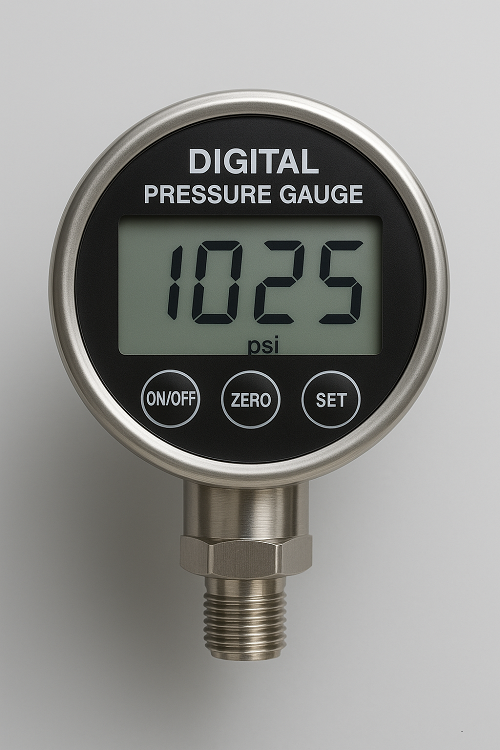
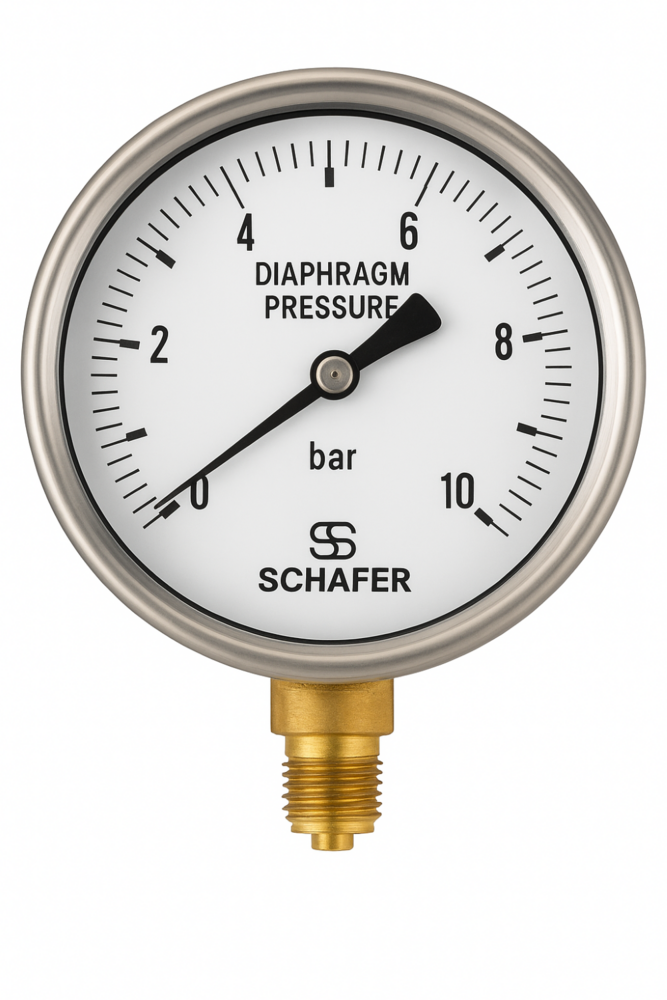
Digital pressure gauges
6500 INR/Number
Product Details:
- Thread 1/4 or 1/2 NPT, BSP, G
- Bourdon Tube Stainless Steel / Copper Alloy (if applicable)
- Case Stainless Steel / Aluminum / Plastic
- Sensor Type Piezoelectric / Strain Gauge
- Display LCD / LED, Backlit
- Outer Size 63 mm / 100 mm / 150 mm (standard options)
- Glass Size Polycarbonate / Tempered Glass
- Click to view more
X
Digital pressure gauges Price And Quantity
- 100 Number
- 6500 INR/Number
- 3000.00 - 6500.00 INR/Number
Digital pressure gauges Product Specifications
- 150mm Millimeter (mm)
- Industrial / High Accuracy
- Standard 63mm, 100mm, or 150mm diameter (varies by model).
- Pressure Gauges
- Piezoelectric / Strain Gauge
- Silver/Black housing with black digits on white/grey LCD (backlit blue/white).
- LCD / LED, Backlit
- Industrial, hydraulic, pneumatic, and laboratory pressure measurement.
- NBR / Viton / Silicone
- 0.25% FS / 0.5% FS %
- 150500g (depending on model and size). Grams (g)
- 1/4 or 1/2 NPT, BSP, G
- Max 400 bar
- Stainless Steel / Aluminum
- Stainless Steel / Copper Alloy (if applicable)
- 63mm Millimeter (mm)
- 63 mm / 100 mm / 150 mm (standard options)
- Stainless Steel / Aluminum / Plastic
- Polycarbonate / Tempered Glass
- 150 mm Nanometer (nm)
Digital pressure gauges Trade Information
- 5000 Number Per Month
- 5 Days
- Yes
- Contact us for information regarding our sample policy
- All India
Product Description
-
The Digital Pressure Gauge is a highprecision instrument designed for accurate measurement of pressure in industrial hydraulic and pneumatic systems Featuring a clear LCDLED display with selectable units bar psi kPa MPa it ensures fast and reliable readings Constructed with robust stainless steel or aluminum housing it offers IP65IP67 protection against dust and water making it suitable for harsh environments With options for battery or USB power and versatile pressure connections NPT BSP G it combines durability with convenience Ideal for process monitoring laboratory use and general industrial applications
Key Features
High accuracy 025 FS 05 FS
Pressure range 01 to 0400 bar Vacuum Pressure
MaxMin memory Peak hold Tare function Autooff
Compact design with backlit LCDLED display
Suitable for industrial hydraulic and pneumatic system
Unmatched Precision for Diverse Applications
Our digital pressure gauges excel in delivering reliable pressure measurements, vital for industrial, hydraulic, and pneumatic systems, as well as laboratory research. With high accuracies of 0.25% FS and 0.5% FS, these gauges ensure flawless control and monitoring, enhancing operational safety and quality wherever precise pressure data is essential.
Flexible Design and Durable Construction
Choose from models with stainless steel, aluminum, or plastic cases, and robust Bourdon tubes made from stainless steel or copper alloy. The gauges are available in multiple sizes (63mm, 100mm, 150mm), and feature versatile thread options (1/4 or 1/2 NPT, BSP, G) for simple integration and long-term durability in challenging environments.
Advanced Display and Sensor Technology
Our digital gauges incorporate innovative LCD or LED backlit screens in silver or black housings, with clear black digits on white or grey backgrounds. Accurate readings are ensured using advanced piezoelectric or strain gauge sensors, supported by high-quality seal materials for reliable performance under pressure up to 400 bar.
FAQs of Digital pressure gauges:
Q: How do I choose the right digital pressure gauge model for my application?
A: Select a model based on your specific usage (industrial, hydraulic, pneumatic, or laboratory), required accuracy (0.25% FS or 0.5% FS), pressure range (up to 400 bar), and installation requirements such as thread type (NPT, BSP, G). Also, consider housing materials and gauge diameter (63mm, 100mm, or 150mm) depending on environmental and space constraints.Q: What benefits do digital pressure gauges offer over analog types?
A: Digital pressure gauges deliver higher accuracy, clear visual readings via LCD or LED displays, and enhanced reliability. They are less susceptible to parallax errors and often provide additional features like backlighting for improved visibility in low light and advanced sensor technologies for stable, repeatable measurements.Q: Where can digital pressure gauges be used most effectively?
A: These gauges are suitable for diverse applications, including industrial automation, hydraulic systems, pneumatic circuits, and laboratory testing. Their robust construction and high accuracy make them ideal for settings demanding precise and dependable pressure readings.Q: What is the process for installing a digital pressure gauge?
A: Installation begins by selecting the appropriate thread type (1/4 or 1/2 NPT, BSP, or G) and ensuring compatibility with the system. Securely attach the gauge to the pressure port using the recommended seal material (NBR, Viton, or Silicone), power on the device, and calibrate as specified in the manufacturers manual.Q: When should I consider recalibrating my digital pressure gauge?
A: Regular calibration is advised annually or as recommended by the manufacturer to maintain measurement accuracy. More frequent calibration may be necessary in critical or high-usage environments to ensure ongoing reliability.Q: What sensor types do these pressure gauges use, and what are their advantages?
A: Depending on the model, the gauges utilize piezoelectric or strain gauge sensors. Piezoelectric sensors offer quick response and durability, making them suitable for dynamic pressures, while strain gauge sensors provide excellent stability and high accuracy for static and dynamic pressure measurements.Tell us about your requirement

Price:
Quantity
Select Unit
- 50
- 100
- 200
- 250
- 500
- 1000+
Additional detail
Mobile number
Email

Other Products in 'Pressure Gauge' category

Contact Details

- FF 9, Shrinathji Arcade, Plot no 4706/3, GIDC,Ankleshwar - 393002, Gujarat, India
- Phone : 08045814391
MAYA ENGINEERING
GST : 24BBKPR6870F1ZB

- Mr. Shailesh (Proprietor)
- Mobile : 08045814391
- Send Inquiry
 Send Inquiry
 Send Inquiry
 Send SMS
 Call Me Free
MAYA ENTERPRISES
All Rights Reserved.(Terms of Use)
Developed and Managed by Infocom Network Private Limited.
Developed and Managed by Infocom Network Private Limited.


 English
 Spanish
 French
 German
 Italian
 Chinese (Simplified)
 Japanese
 Korean
 Arabic
 Portuguese